
By Niekaylah Binns (Therapy Assistant) & Emma Langley (Clinical Psychologist)
When we think about children learning new skills, we often picture teaching, practising or giving instructions. However, children can also learn through play.
During play, children may have opportunities to practise communication, problem-solving, emotional regulation, flexible thinking and connecting with other people. These opportunities can arise through the activity and the interaction around it.
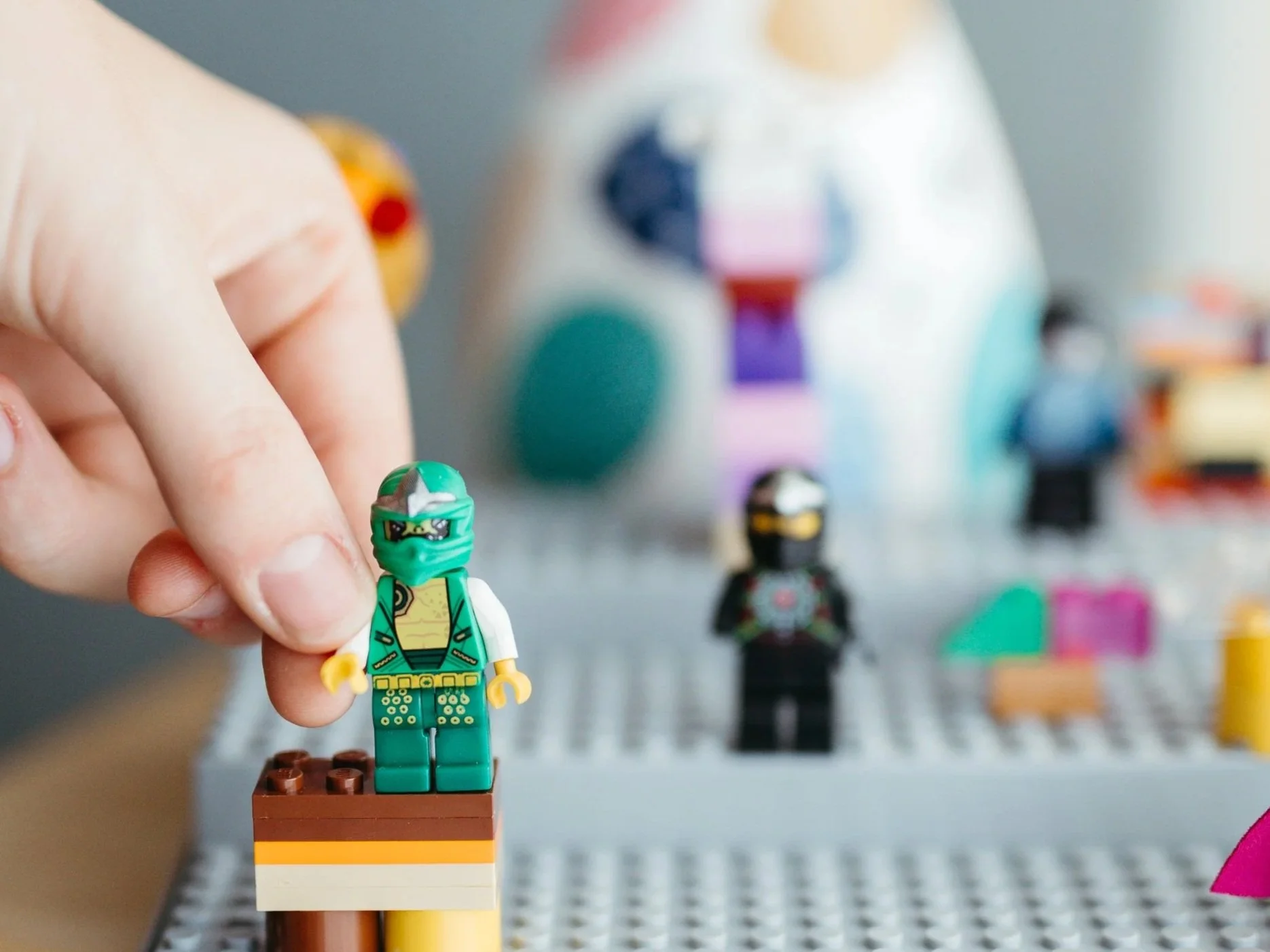
For example, while your child is building with LEGO, playing shops, lining up animals or returning to a favourite game, they might also be practising:
staying connected with another person
communicating an idea
asking for help
coping with an unexpected change
solving a problem
considering another person’s idea
returning to an activity after becoming frustrated.
Start with where your child is that day
A helpful starting point is to meet your child where they are.
One day, they may be ready for shared problem-solving and imaginative play. On another day, they may be tired, worried or overwhelmed and need more support to feel comfortable and connected.
Rather than trying to reach the same point every time, notice what your child may need in that moment and build from there.
Support regulation before adding more demands
Think about how difficult it can be to concentrate when you are tired, hungry, stressed or overwhelmed. Children experience this too.
Before expecting your child to communicate, solve a problem or try something challenging, consider whether they are ready to engage. If they are worried, tired or overloaded by noise, movement or other sensory information, adding more questions and instructions may not help.
Instead, notice what seems to support them. Depending on the child and the situation, this could include:
offering movement
moving to a quieter or more familiar space
staying close to a trusted person
giving them more physical space
reducing the number of questions or instructions
returning to a familiar and enjoyable activity.
The aim is not to force your child to look calm. It is to understand what they need in that moment to feel safe, comfortable and organised enough to connect.
Join before you lead
Start by noticing what has captured your child’s interest and joining them there.
You do not need to immediately change the game or teach something new. If your child is pushing cars down a ramp, you might grab another car. If they are building something in Minecraft, you could show interest in it. If they are pretending to be a dinosaur, perhaps you become another dinosaur.
Starting with something your child already enjoys can make it easier to build a shared interaction. It also communicates that their ideas and interests are important to you.
Following your child’s lead does not mean that they control everything or that you can never introduce a new idea. It means establishing connection before deciding whether the play is ready to grow in another direction.
Notice back-and-forth communication
Communication goes beyond spoken words. It may happen through:
facial expressions
gestures
sounds
movement
actions
shared jokes
pictures or communication devices
pretend play.
For example, your child might push a car towards you. You push it back, and they laugh before sending it towards you again. No one needed to ask a question, but a back-and-forth interaction still occurred.
These opportunities for back-and-forth can be brief and easy to miss. By noticing an opportunity to connect and responding in a way that invites your child to continue, you show them that you are paying attention and interested in what they are doing, without placing extra demands on them.
Leave room for your child to respond
Adults often fill quiet moments with questions:
“What colour is that?”
“What are you making?”
“Where is the dog going?”
Questions are not necessarily unhelpful. However, asking several questions can sometimes add pressure or make the interaction feel like a series of demands rather than shared play.
Try pausing and giving your child a little more time, without adding words or questions. That extra space may give them an opportunity to start an interaction, communicate an idea or work out what they want to do next.
You could use an interested expression, gesture, comment or playful action instead of asking another question. For example, rather than asking, “Where is the dog going?”, you might say, “That dog looks ready for an adventure,” and wait to see what your child adds.
The aim is not to make your child respond. It is to leave space in the interaction for them to contribute in their own way.
Add one small change
Following your child’s lead does not mean avoiding all challenge.
Once your child is engaged and the interaction is moving back and forth, you might introduce one small problem, surprise or new idea.
For example, your child builds a LEGO house and you say:
“Oh no! I don’t think my giraffe will fit through that door.”
This creates a problem to explore.
Will your child make the door bigger? Find a smaller animal? Tell the giraffe to duck? Decide that giraffes are not allowed inside?
There is no single correct response. The useful part is the thinking, communication and shared problem-solving that may happen next.
Other small changes could include:
getting a toy “stuck”
introducing a new character
changing one part of a familiar game
making a playful mistake
wondering aloud about what might happen next.
Aim for a change that encourages interest and thinking without making the activity feel overwhelming. If your child becomes distressed or disengages, you can reduce the challenge, return to the familiar activity or try again another time.
Expand their idea
When your child offers an idea, you can sometimes help it grow by adding a feeling, a problem, another person’s perspective or a cause-and-effect connection.
Perhaps a dinosaur is going to school. You might wonder whether the dinosaur feels nervous on their first day. The dinosaur might discover that the chairs are too small, surprise the teacher when they arrive or accidentally knock over a table with their tail.
These additions can create opportunities to explore language, emotions, perspectives and social situations while keeping the play connected to your child’s original idea.
Your child may accept your idea, change it or reject it completely. That is part of the interaction too.
Remember: Watch, Join, Wait, Add
A simple way to bring these ideas together is:
Watch: Notice what your child is interested in, how they are communicating and what they might need.
Join: Enter the activity without immediately taking over or changing it.
Wait: Pause and leave room for your child to respond, initiate or add an idea.
Add: When your child is ready, introduce one small idea, problem or playful challenge.
You do not need to turn your home into another therapy session. These ideas can fit into ordinary routines and brief moments of connection.
Back-and-forth communication might happen while making breakfast. Problem-solving might happen when something does not fit in the dishwasher. Waiting might mean pausing while your child works out how to ask for help.
The goal is not perfect play. It is to create more everyday opportunities for communication, regulation, problem-solving and connection.